
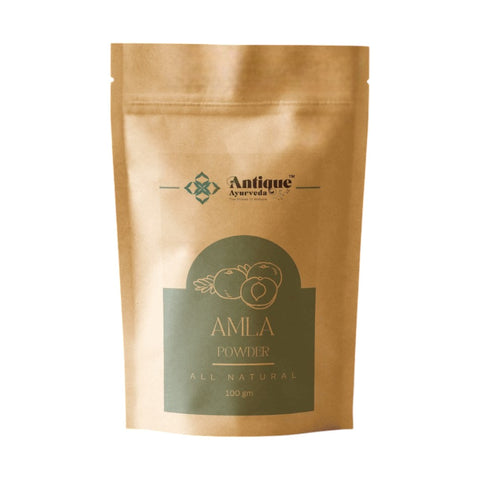


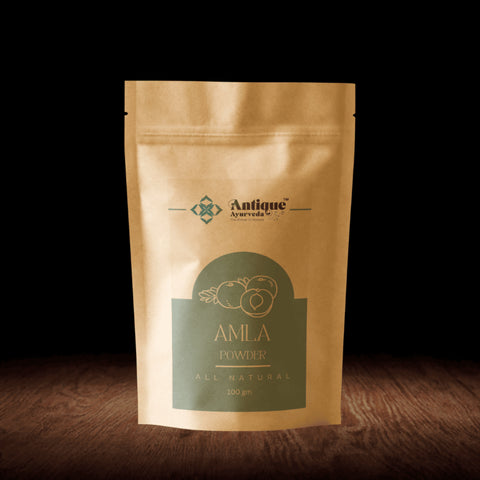
Pure Amla Powder (Indian Gooseberry)
Product Description
Antique Ayurveda Amla Powder is made from organically grown Indian gooseberry (Emblica officinalis / Phyllanthus emblica) — the small, green, intensely sour fruit that is one of the most revered ingredients in both Ayurvedic medicine and Indian culinary tradition. The fruits are carefully harvested, shade-dried, and ground into a fine powder.
Amla (Amalaki in Sanskrit) is revered in Ayurveda as the foremost of all Rasayana herbs — substances described in classical texts as promoting vitality, supporting the body's natural resilience, and nourishing tissues. It is one of the three fruits in the classical Ayurvedic formulation Triphala.
Amla is among the richest natural food sources of Vitamin C — containing significantly more than citrus fruits by weight, and uniquely, the Vitamin C in amla is bound to tannins that make it more stable during processing and storage than ascorbic acid from citrus.
Amla powder is used in herbal teas and kadha, mixed with warm water, honey, or warm milk, added to hair masks and scalp treatments, used in skincare preparations, and incorporated into traditional chutneys and preserves (Amla murabba).
Key Features & Benefits
| Feature | Detail |
|---|---|
| Rich Natural Vitamin C | One of the richest food sources of Vitamin C — bound to tannins for enhanced stability. |
| Shade-Dried | Vitamin C degrades with heat — shade drying preserves more of the natural content. |
| Classical Rasayana Herb | Amalaki (amla) is the foremost Rasayana in Ayurvedic classical literature. |
| One of Three Triphala Fruits | Essential component of Triphala — the most widely used classical Ayurvedic formulation. |
| Multi-Use Application | Herbal teas, hair masks, face packs, traditional chutneys, and Ayurvedic formulations. |
| No Additives | Pure amla fruit powder — no fillers, no preservatives, no artificial colour. |
As Per Ayurveda
Amalaki (Emblica officinalis) is described in the Charaka Samhita as the greatest of all Rasayana herbs — specifically praised for its ability to promote Ojas (vital essence), Vaya-sthapana (age-sustaining), and Chakshushya (nourishing to vision). It is classified as having Pancharasa (five tastes — all except Lavana/salt), Laghu (light), Ruksha (dry) qualities, and Sheeta virya (cooling potency). Ayurveda considers amla uniquely Tridosha shamak — balancing to all three doshas — making it one of the most universally applicable herbs in the Materia Medica. Triphala, the classical formula containing amla alongside Haritaki and Bibhitaki, is one of the most prescribed preparations in Ayurvedic practice.
Why Choose Antique Ayurveda
| Reason | Detail |
|---|---|
| Shade-Drying for Vitamin C | Heat degrades Vitamin C — our shade-drying method maximises natural content preservation. |
| Whole Fruit Powder | Made from the whole amla fruit — no extraction, no concentration. |
| No Fillers | Pure amla fruit powder — no added starch, no anti-caking agents, no colour. |
FAQ
A: Mix 1/2 teaspoon of amla powder into a glass of warm water and drink first thing in the morning, or mix into warm milk with a little honey in the evening. It can also be added to smoothies, sprinkled over food, or mixed into chutneys. Start with a smaller quantity (1/4 teaspoon) if new to amla, as the very sour flavour can be intense.
A: Mix 2–3 tablespoons of amla powder with warm water or coconut oil to form a paste. Apply to the scalp and hair from roots to tips. Massage the scalp gently. Leave for 30–60 minutes under a shower cap, then rinse thoroughly with cool water and wash with natural hair cleanser. Amla can also be added to infused hair oils alongside bhringraj and brahmi powders.
A: The Vitamin C in amla is bound to natural tannins (polyphenols) rather than existing as free ascorbic acid. This complex is more stable during processing, cooking, and storage than ascorbic acid from citrus fruits. It also works synergistically with the other naturally present compounds in the fruit. This is why amla powder retains significant Vitamin C content even after drying.
A: Yes — amla powder combines well with many traditional Ayurvedic herbs. The classical formulation Triphala combines amla with Haritaki and Bibhitaki. Chyawanprash, the most famous Ayurvedic Rasayana, has amla as its primary ingredient. For personalised herbal combinations based on your constitution and health goals, consult a qualified Ayurvedic practitioner.